Table of contents
Paris, Rome, Barcelona, Prague: the postcards are familiar, yet the experience rarely is, and in 2026 the most striking shifts in travel are coming from what happens off-camera. As airlines and short-term rentals keep capacity high, and as cities tighten rules on crowd hotspots, visitors are increasingly pushed toward everyday rituals, neighborhood calendars, and local etiquette that quietly rewrite the “must-see” list. The result is a different kind of landmark, one measured less by architecture than by custom, and by how quickly it changes your assumptions.
When a city teaches you new rules
How can the same destination feel brand new? Often, it is not the skyline that changes, but the choreography, the small social contracts that locals follow without thinking and that visitors only notice once they get them wrong. In many European cities, “popular” now also means “regulated,” and that regulation nudges travelers into spaces where traditions are stronger than tourism. Venice has tightened group-tour rules and amplified fines for disruptive behavior, Amsterdam has run high-profile campaigns discouraging rowdy party tourism, and Barcelona has expanded restrictions around short-term rentals, all in the name of livability. These policies are debated, sometimes contested, yet they share one effect: they redirect foot traffic toward less scripted parts of town, where the local way of doing things becomes the main attraction.
That redirection can be subtle, and it starts with time. A museum queue is an international language, but the rhythm of a city’s morning is not. In Southern Europe, the long lunch, the late dinner, and the social expectation of lingering over coffee can recalibrate how visitors plan their day, and it can make famous sights feel secondary to the hours between them. In Central Europe, the etiquette of markets, the unspoken quiet of certain churches, and the seriousness of memorial sites can be even more transformative, because they come with moral weight. Travelers arrive thinking they are consuming culture, then realize they are being shaped by it, and the destination becomes less “top ten” and more “how people live.”
There is also the question of language, not in the sense of fluency, but in the sense of what is considered polite. In many places, asking before photographing a stall, lowering your voice on public transport, or respecting dress codes at religious sites is not a “nice-to-have”; it is part of the local social order. A visitor can ignore these cues and still tick off landmarks, yet they will miss the deeper shift, the moment when a place stops being a backdrop and starts being a community with boundaries. That is where traditions do their quiet work: they change the traveler’s role from spectator to participant, and in doing so they change what “popular” feels like.
Food, faith, and festivals: the real itinerary
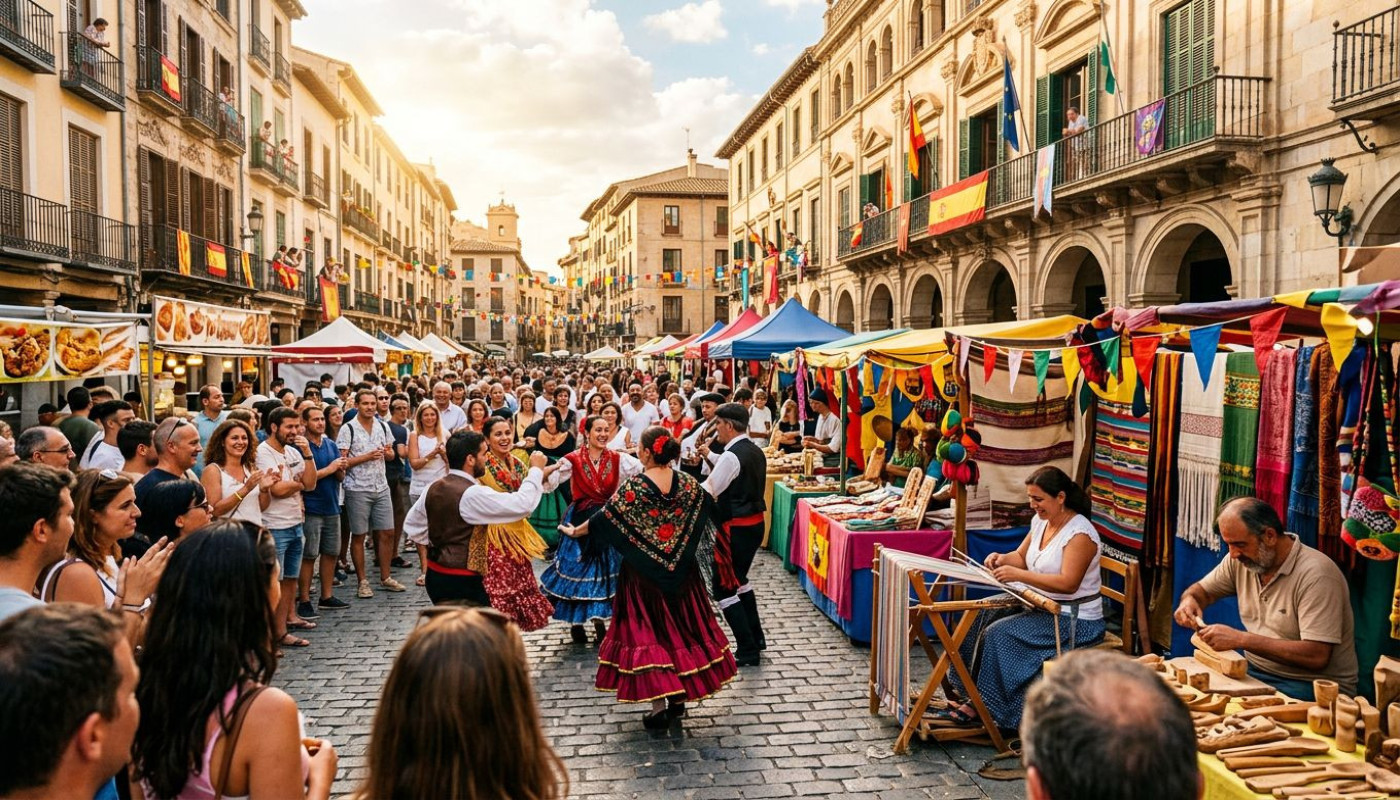
Want to understand why locals roll their eyes at certain “must-do” lists? Start with what residents schedule their lives around, because those anchor points often sit outside the tourist grid. Religious holidays, neighborhood fairs, harvest events, and commemorations can reshape an entire week, and they can make the most famous streets feel like corridors leading to something else. In Spain, Semana Santa processions can turn city centers into slow-moving theatres of devotion, in parts of Italy, patron-saint days can bring fireworks and closed shops, and across Europe, Christmas markets can transform public squares into seasonal villages that locals treat as social spaces, not just shopping venues.
Food traditions are just as powerful, and they are often misunderstood as “cuisine” rather than ritual. The difference matters: a dish on a menu is an object, but a dish tied to a day, a season, or a family practice is a calendar. Think of the way Friday fish habits persist in some regions, or how Easter breads and All Saints’ pastries appear and vanish with near-punctuality. Visitors who chase “the best restaurant” can easily miss the more telling scene, the bakery line at dawn, the market stall that only shows up on Saturdays, the bar where the same customers greet each other by name. These routines, repeated week after week, create a texture that no landmark can replicate.
Mass tourism has, paradoxically, made these rituals more visible, because residents defend them when they feel squeezed. When a city becomes crowded, locals often retreat to familiar places and reaffirm habits that signal belonging, and travelers who approach respectfully can be invited into that world. The key is not to hunt for “authenticity” as if it were a product, but to arrive with curiosity and patience. If a festival slows traffic, if a procession blocks a bridge, if a family-run café closes early for a local holiday, the inconvenience is not a glitch; it is the point, and it can flip a visitor’s perception from consumer convenience to cultural reality.
Kraków shows why details matter most
Can a place be both famous and intimate? Kraków is a persuasive case, because it is widely visited, yet still governed by customs that do not bend easily to tourist expectations. The Old Town and Wawel Castle draw the predictable crowds, but the city’s emotional center often sits elsewhere: in the cadence of church bells, in the etiquette of memorial spaces, and in the way locals use parks, courtyards, and riverside paths as everyday living rooms. The difference between “seeing Kraków” and “understanding Kraków” frequently comes down to a traveler’s willingness to follow local cues, especially around history, faith, and food.
Take remembrance. Few European cities carry the weight of 20th-century history as directly as Kraków and its surroundings, and that weight shapes behavior. The expectation of respect at sites connected to the Holocaust is not a suggestion, it is a norm, and visitors who arrive with a social-media mindset often find themselves corrected, sometimes bluntly. That correction can be uncomfortable, yet it is also clarifying: the trip stops being an aesthetic experience and becomes an ethical one. In practical terms, it changes how people move, how they speak, what they photograph, and how long they stay, and it can make the most “popular” stops feel like responsibilities rather than trophies.
Then there is the everyday culture that makes the city feel lived-in rather than staged. Milk bars, once a socialist-era staple, still offer a window into Polish comfort food at prices that remain accessible, and they carry their own etiquette: queue calmly, order efficiently, share space. Seasonal markets, pierogi counters, and neighborhood bakeries can be as instructive as any museum, because they show how local routines survive alongside tourism. For travelers trying to plan this kind of experience without falling into generic checklists, specialized local resources can help stitch together history, transport, and timing, including https://www.krakow-trip.com/, which is useful when you want the practicalities to serve the city, not the other way around.
The most striking shift, however, happens when visitors stop treating traditions as performances. In Kraków, a church service is first a service, not an attraction, and a cemetery visit is first a family act, not a photo opportunity. Once that hierarchy is understood, perception changes quickly. The city’s famed beauty remains, yet it becomes less about “where to stand” for the perfect view and more about “how to behave” in a place that remembers, celebrates, mourns, and eats according to its own calendar.
How travelers can change, without forcing it
What if the best travel hack were humility? In an era when destinations are mapped, rated, and optimized, the most memorable experiences are often the least controllable, and they come from letting local traditions set the terms. That does not mean romanticizing the everyday or pretending tourists can “become local” in a weekend; it means acknowledging that visitors are guests, and that the guest role comes with obligations. Those obligations are simple, yet consequential: observe before acting, ask before photographing, learn a few basic phrases, and accept that not every space is designed for you.
There are also concrete ways to make this shift without turning it into a moral performance. Build itineraries around markets, public transport, and local timetables rather than around the most photographed street; you will naturally encounter the rhythms that residents follow. Choose one festival, one neighborhood, and one historical site that demands context, then give each enough time so the experience is not reduced to a quick pass. Spend money where community life is visible, at independent cafés, small museums, and family-run counters, and remember that price is not the only signal of value. In many cities, the most tradition-heavy experiences are inexpensive, because they are not staged for tourists.
Finally, recognize that “popular destinations” are not static. They are under pressure from housing costs, crowd management, and climate-related disruptions, and local traditions can be both fragile and resilient under that strain. When travelers treat customs as something to respect rather than something to consume, they reduce friction, they gain access to richer stories, and they bring home a different kind of souvenir: a changed sense of what a city is for, and who it belongs to.
Planning that respects the local clock
Book early when your trip coincides with festivals, public holidays, or peak summer weekends, because accommodation and guided visits can sell out quickly in cities under overtourism pressure, and last-minute choices tend to push budgets upward. Set aside money for local transport and small cash purchases, and check whether city cards or rail passes make sense for your route. Look up municipal rules, and see if any museum or memorial ticketing requires timed entry; in some places, discounts and youth rates apply with ID, and occasional cultural subsidies cover free-access days.
Similar
What Seasoned Travelers Wish They Knew Before Choosing A Destination
Why Slow Travel Is Redefining Destination Choices This Year
How A Simple Detour Can Reinvent Your Travel Itinerary

How Unexpected Destinations Redefine Your Sense Of Adventure

How Ethical Safaris Enhance Your Travel Experience?

Experiencing the magic of Tromso northern lights and outdoor adventures beyond the Arctic Circle in Norway

Exploring The Art Scene: A Guide To New York's Most Vibrant Street Art
